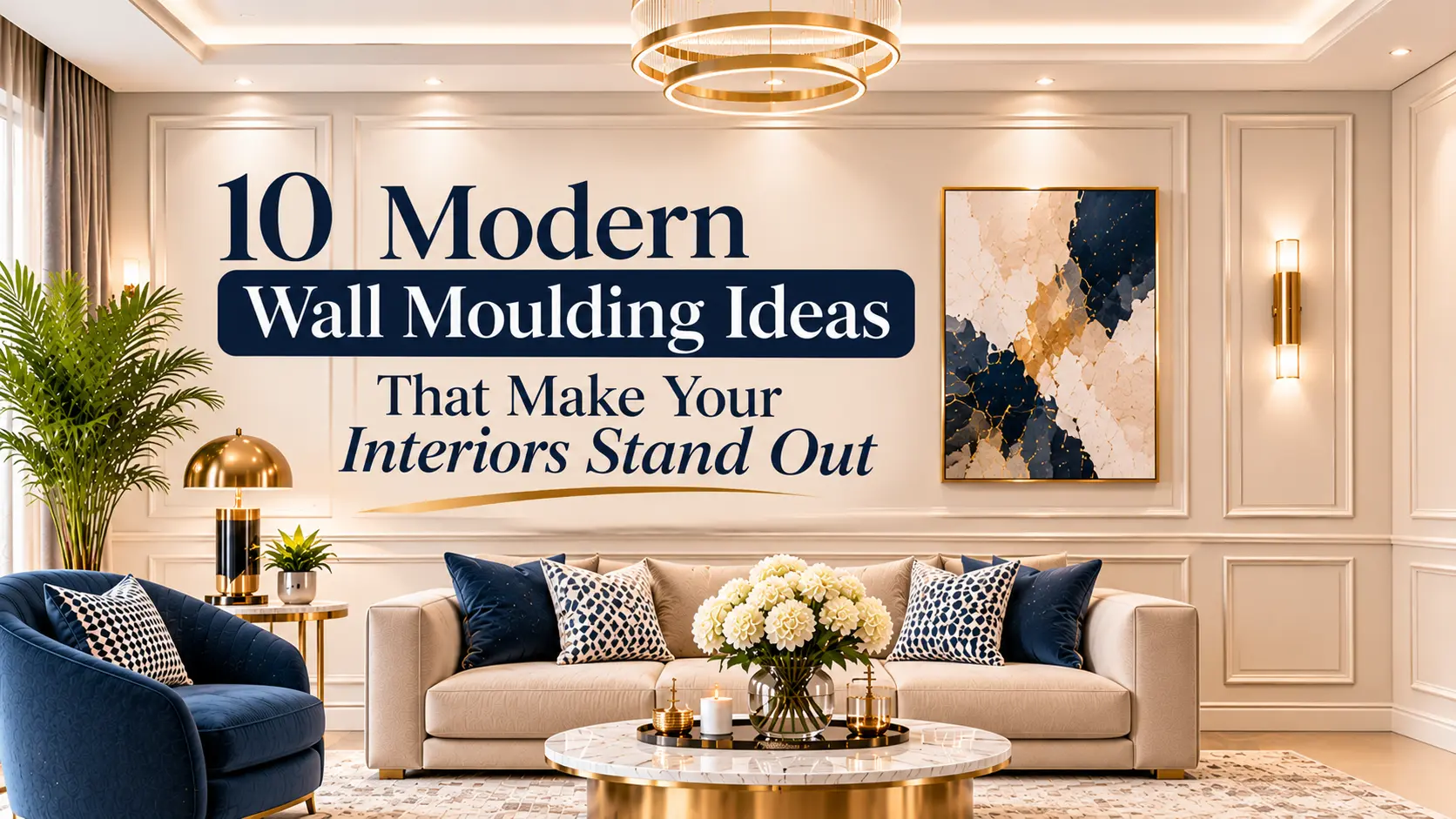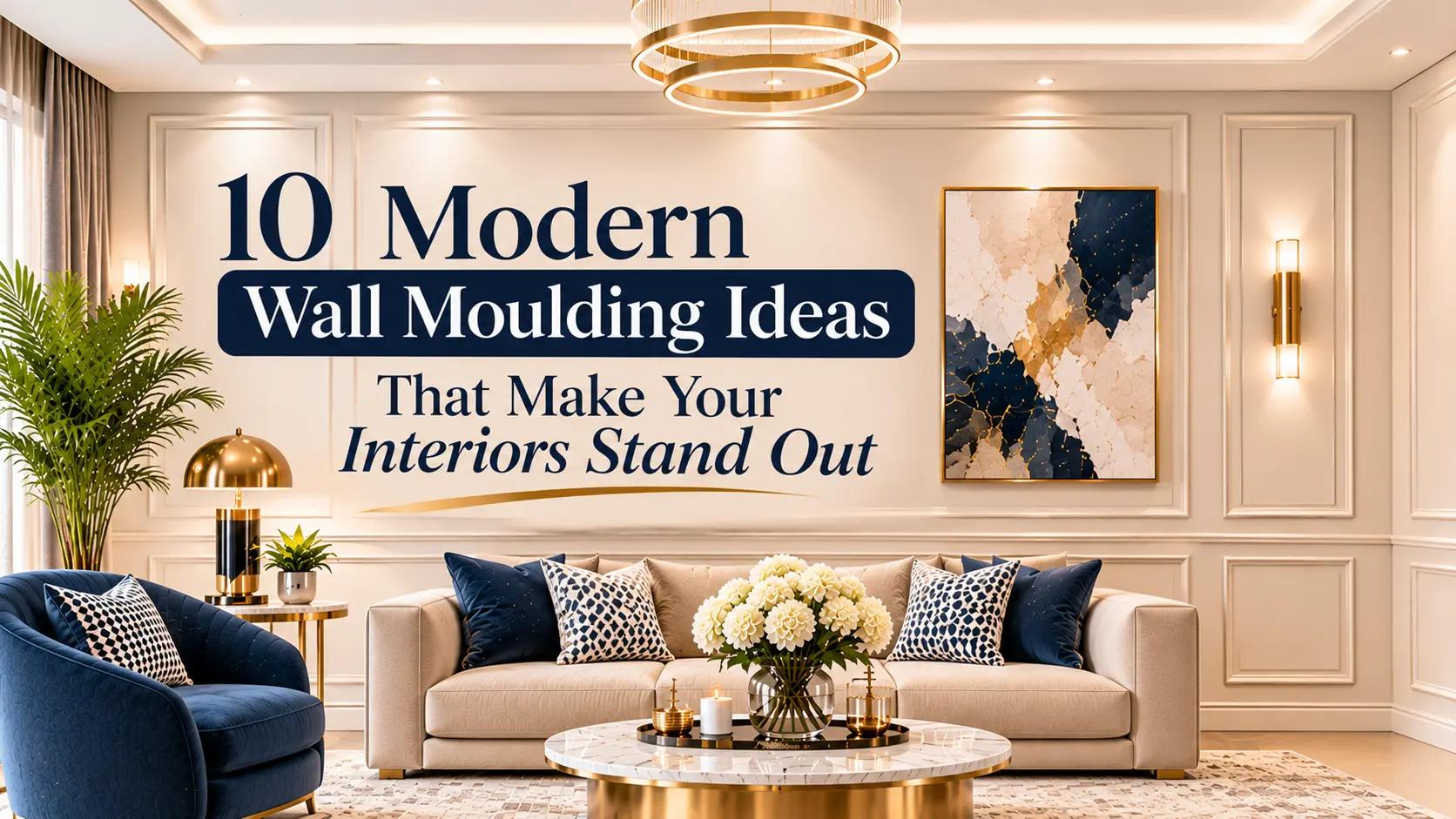
An unadorned wall can sometimes make an otherwise beautifully designed room feel unfinished. It is interesting to consider that you don't always need expensive wall finishes, stone cladding, or elaborate wallpapers to fix that issue. An architectural approach to interior design can take into consideration profiles, panels, and other modern wall molding designs, as well as how those elements are placed on walls to give flat surfaces dimension. Depending on the design, moulding can make a wall appear longer or taller, help create symmetry with furniture, or introduce visual rhythm and other design elements to a room.
Traditionally, moulding was used to create frames and decorative elements for space, but today, designers have moved beyond that. Asymmetric designs and arrangements, as well as the use of different profiles, layering, and other elements to create contrast and visual interest, have become popular.
What Makes Modern Wall Moulding Design Different from Traditional Styles?
Wall moulding has definitely changed over the years. Traditionally, designs would incorporate details such as carved elements, borders, and frames. More recently, modern wall moulding design tends to incorporate elements such as patterns, designs, and layouts that incorporate balance. The differences between the two styles go beyond design elements and incorporate how the elements are incorporated into the interior of a home. The following table outlines the differences between traditional and modern wall moulding design:
Factors | Modern Wall Moulding | Traditional Wall Moulding |
Design Style | Uses straight lines, geometric patterns, and simple shapes for a clean look. | Features decorative curves, ornate patterns, and detailed designs. |
Panel Shapes | Usually has slim rectangular panels, square frames, or asymmetrical patterns. | Often includes large rectangular frames with layered and decorative borders. |
Moulding Thickness | Uses thin or medium-width profiles that don't make walls look too heavy. | Often uses thicker profiles to create a more detailed appearance. |
Colour Combinations | Works well with white, beige, grey, sage green, and other contemporary shades. | Commonly uses ivory, cream, gold, deep brown, and rich wood tones. |
Wall Finishes | Often paired with matte paint, textured finishes, or subtle wallpapers. | Commonly paired with decorative paint finishes, rich textures, and classic wallpapers. |
5 Modern Wall Moulding Styles That Add Character to Your Interiors
Wall moulding has evolved beyond the basic rectangular designs of the past. Contemporary interior design uses various moulding designs to deepen and enrich space while avoiding overcrowding. The type of design you choose affects the look and feel of the room. Some designs make a room appear taller while others provide a backdrop for furniture or artwork.
The following are some of the trending modern wall moulding design you can incorporate in your home.
- Geometric Wall Moulding: This style incorporates irregular shapes and lines. Geometric moulding is ideal for feature walls, such as those behind sofas. For a bold, contrasting look, you can paint the moulding in a different color from the wall. You can achieve a more toned-down look by painting everything in similar colors.
- Slim Linear Moulding: Slim linear moulding uses a series of evenly spaced, narrow strips. The orientation of these lines can be horizontal or vertical. Vertical striping focuses the eye upward, and horizontal stripes can make a wall appear wider.
- Arched Moulding: As the name suggests, arched moulding adds a curved frame as opposed to a straight edge. The use of a soft line breaks up some of the rigidity of a room and can add subtle decorative elements. It works well in bedrooms and dining rooms and can also be used to frame a headboard.
- Fluted Moulding: Fluted moulding can add texture to a wall and is most noticeable by the repeated vertical striping. Unlike flat panel moulding, it adds dimension through light and shadow. It can also be used behind a TV or around a dining area.
- Asymmetrical Moulding: A personalized and artistic design gives moulding the freedom to deviate from standard balanced designs. This can take form in irregular shapes, sizes, and spacing. It works best when used to create an accent wall in a more contemporary setting.
5 More Wall Moulding Ideas That Bring Depth and Dimension to Your Walls
Wall moulding has many uses and applications beyond simply framing an empty wall space. Patterns can be incorporated into wall moulding designs to create order, vertically oriented wall moulding can give the illusion of higher ceilings, and wall molding can even incorporate integrated lighting to illuminate a wall in an interesting way.
If you’re interested in adding wall moulding to your home but want to avoid using heavy, ornamental wall finishes, then take a look at the five modern wall moulding design below.
- Grid-Style Moulding: Grid-style moulding evenly partitions a wall into a series of smaller wall sections, usually in a square or rectangular shape. This style is especially useful in larger wall spaces such as living room and dining room wall partitions. Just as with the grid-style moulding, you can choose to use contrasting wall colors to create a more apparent grid or use the same wall color to create a more subtlHalf-Wall Mouldinge effect.
Vertical Moulding: Vertical moulding is usually incorporated into walls to frame space, create divisions, or be used in partitions. Vertical moulding serves this function as well, however, the wall moulding itself is oriented in a way that creates a natural illusion for the eye to travel upward. The use of vertical moulding in wall partitions is particularly effective in rooms with lower ceilings.
- Horizontal Moulding: Horizontal moulding is made up of long, repeated horizontal lines or large, horizontal panels. It is best used to decorate wide areas, like the walls behind couches or beds. It can also be used in thin, narrow spaces. The best designs with horizontal moulding incorporate just two or three horizontal sections to keep the design well-balanced. Using many, very thin lines can make a wall look very busy.
- Half-Wall Moulding: Half-wall moulding leaves the top part of a wall free to be painted, papered, or panelled and is best used to create detailing in an architectural element without taking over the entire space. It is best used in hallways, bedrooms, and dining rooms. To tie the upper and lower parts of the wall together, the same color can be used for the entire wall, or two contrasting colors for the upper and lower parts of the wall can be used, depending on the effect desired.
- Wall Moulding with LED Lights: Adding LED strips to wall moulding creates a nice effect. The LEDs can be placed along the edges of moulding, behind the moulding, or along a recessed area of the moulding. Using LED strips in this way adds decoration to a wall and gives light to a dark area. This effect is best used on feature walls.
How to Select the Right Moulding Style for Your Home Interiors
- Consider Room Size: Choose slim moulding for small rooms and broader designs for larger spaces.
- Check Ceiling Height: Vertical moulding works well in rooms with low ceilings.
- Match Your Interior Theme: Select patterns that complement your furniture and overall decor.
- Choose the Right Colour: Use matching shades for a subtle look or contrasting colours for a bold effect.
- Focus on Wall Placement: Consider whether the moulding will be used behind a bed, sofa, TV unit, or dining area.
- Select Suitable Materials: Choose MDF, wood, PVC, or PU based on your budget and requirements.
- Plan Your Budget: Consider material, installation, finishing, and maintenance costs.
- Avoid Overdesigning: Keep the pattern balanced so it doesn't make the room look cluttered.
FAQ’s
Which bedroom wall moulding designs create a modern and balanced look?
Patterns such as thin, linear patterns, simple rectangular panels and geometric designs can add a modern touch to a bedroom. When using moulding, you want to be aware of the colors you use and make sure they work well with your other bedroom furniture and accessories.
How do you select the right moulding design for wall proportions?
Wall proportions can help dictate the width of your panels. Usually wider walls can accommodate wider panels, while smaller walls require thinner panels. Thinner panels can also be used between equally spaced moulding to create a more modern look.
What makes modern wall moulding different from traditional designs?
A traditional moulding design tends to repeat itself and uses curved lines. Modern designs incorporate straight lines and sharp angles and tend not to repeat themselves. Modern wall moulding tends to feature clean lines and simple shapes, while traditional wall moulding features more ornate, intricate designs.
Which materials are suitable for different wall moulding styles?
MDF is a good material for simple, more geometric shapes, while PU is better suited for more decorative designs, including curves. Natural materials like solid wood moulding can also be used to create wall moulding to add a textured effect to a space.
How can living room wall moulding design complement modern furniture?
If you have modern or minimalist furniture, using wall moulding with thin, linear patterns would be a good option, as it wouldn't clash with the lines of the furniture. For a more contemporary design, use wall moulding behind a TV unit to frame the TV. For a more seamless look, paint the wall the same color as the moulding.