When it comes to Indian architectural traditions then a house is not just a structure; rather, it's a living, breathing space that holds dreams and memories. As per the ancient science of Vastu Shastra, it guides homeowners and architects in joining their space with universal energies. These universal energies like health, prosperity, and spiritual well-being. Among all the critical aspects of building a home, one of the architectural elements is the staircase. The staircase plays a subtle yet very powerful role in energy circulation across the vertical dimensions of the home.
A staircase as per Vastu, can serve as a channel of positive energy when correctly aligned. On the other hand, if created without Vastu principles, it can lead to a state of disarray. This blog offers an extensive and thorough guide on planning and constructing a staircase as per Vastu, focusing on layout, orientation, step count, materials, and the significance of window design for staircases. We'll additionally discuss optimal methods for implementing Vastu for a staircase within a home, even when limited to a 2% density arrangement.
Understanding the Importance of Staircase as per Vastu
Before we delve deep into the staircase as per Vastu, it is necessary to understand why it is important. Because staircases in Indian households are more than the architectural necessities. This necessity arises from the fact that the vertical movement of the staircase influences the flow of energy between different levels of the home. Therefore, it is very critical to keep their design, direction, and location.
A staircase that cuts through the house centre or sits in the northeast corner is considered a major Vastu defect. This is because it disrupts the natural flow of energy in this house. On the other hand, a staircase is placed towards the south, southwest, or west sides of the house to support a stable, grounded energy movement.
Additionally, in a multi-storeyed building, it becomes even more important to plan the staircase with precision. Because without a proper alignment of the staircase, the view and aesthetics of the house can be ruined. So, for homeowners aiming to follow Vastu for the staircase inside the house can refer to the provided information to begin preparing from the early stages to avoid any financial alterations.
Ideal Direction and Location for Staircases
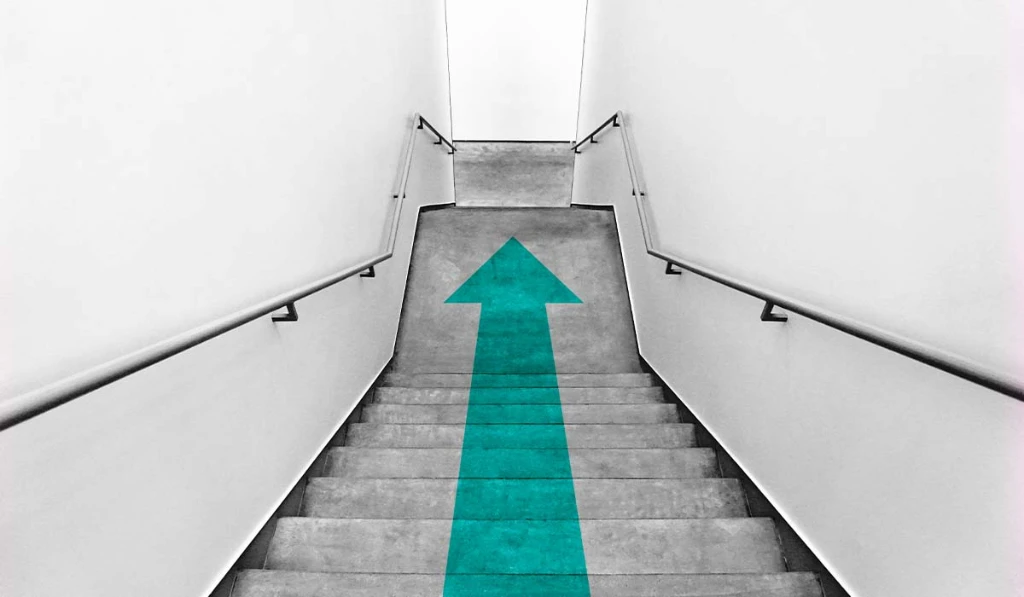
In Vastu Shastra, the direction of the staircase impacts not just the energy circulation but also the health of the inhabitants. For best outcomes, staircases must be positioned in designated locations and rise in a particular way. When designing a staircase as per Vastu, the ascent should follow a clockwise path, meaning that while going up, a person should turn to the right. Clockwise motion is linked to development, enlargement, and advancement. Staircases should be placed to avoid the northeast direction entirely. This area is regarded as the source of divine energy and must remain open and bright. Building a staircase in the northeast corner could result in confusion, financial setbacks, and health problems for residents.
| Direction | Vastu Element | Suitability for Staircase | Why |
| Southwest | Earth | Excellent | Ideal for internal stairs |
| South | Fire | Very Good | Supports upward momentum |
| West | Air | Acceptable | Works well with certain layouts |
| Northwest | Air | Conditional | Use only if others are not viable |
Staircase Shape and Structure As per Vastu
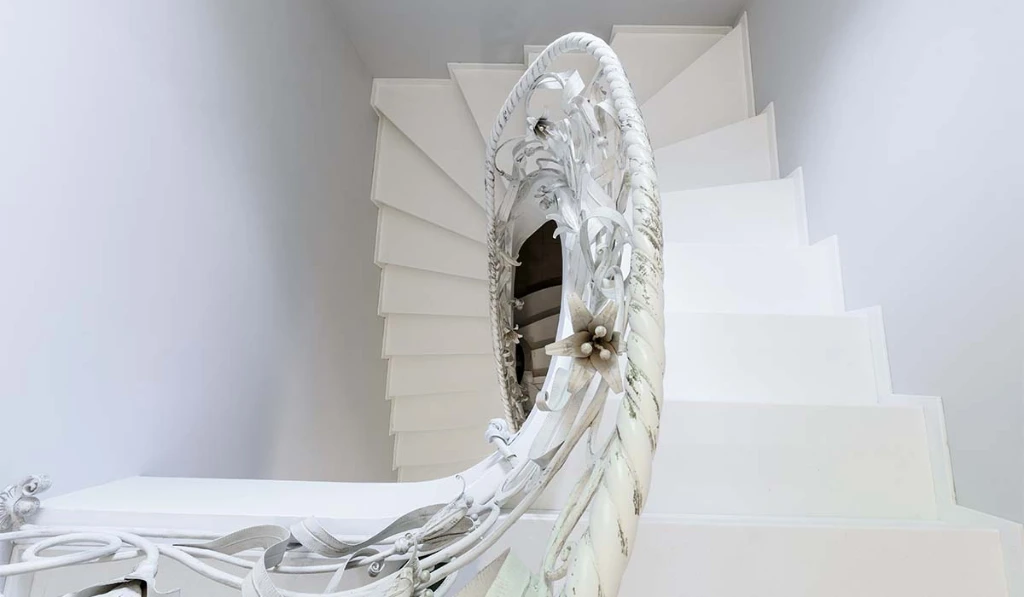
One might wonder how the shape and design of the staircase can influence the energy flow. But let us inform you that it plays a very significant role in the same, with straight or L-shaped designs being highly recommended. These shapes ensure that predictable and balanced energy flows in your house.
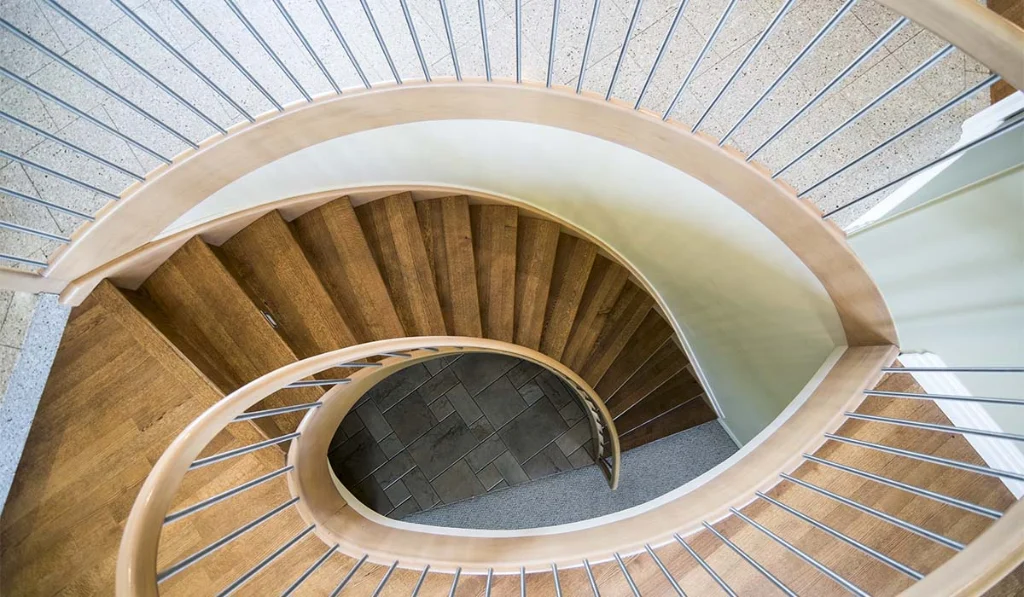
On the other hand, spiral or circular staircases are discouraged. Not only do they twist energy flow in unnatural directions. But they also tend to feel coarse and uncomfortable. In the modern aesthetic culture, spiral stairs are often chosen for building space-saving areas. However, their use should be balanced with natural elements like light and air to avoid Vastu drawbacks.
The recommended movement paths for a staircase include:
- From East to West
- From North to South
- Clockwise turns only when incorporating a turn.
Staircase as per Vastu Step Count and Dimensions
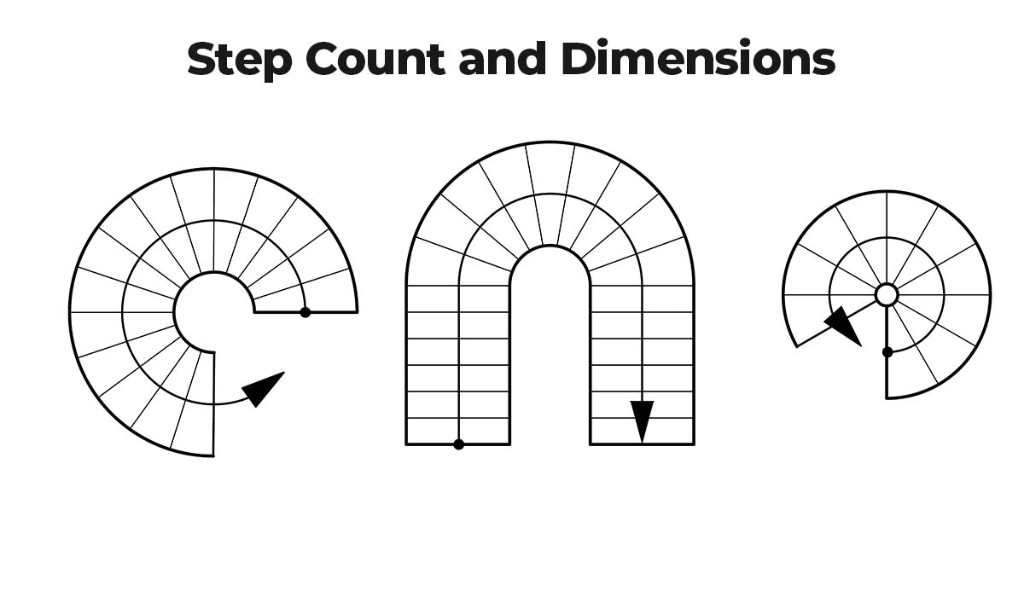
A fundamental principle in Vastu-compliant staircase design is the use of an odd number of steps. This custom is based on the idea that odd-numbered steps preserve a beneficial energy flow. For example, stairways should ideally consist of 9, 11, 15, or 21 steps. Avoid steps that end in zero, like 10, 20, or 30, as they are thought to disrupt energetic balance.
Every step should be consistent in height and width. Uneven steps are not only a physical hazard but also represent an uneven flow of energy advancement. A frequently observed building guideline is the 18-inch rule, stating that the total height (riser) and depth (tread) of a step should roughly sum to 18 inches. This results in stairs that are ergonomically safe and energetically uniform.
Role of Staircase Window Design in Energy Balance
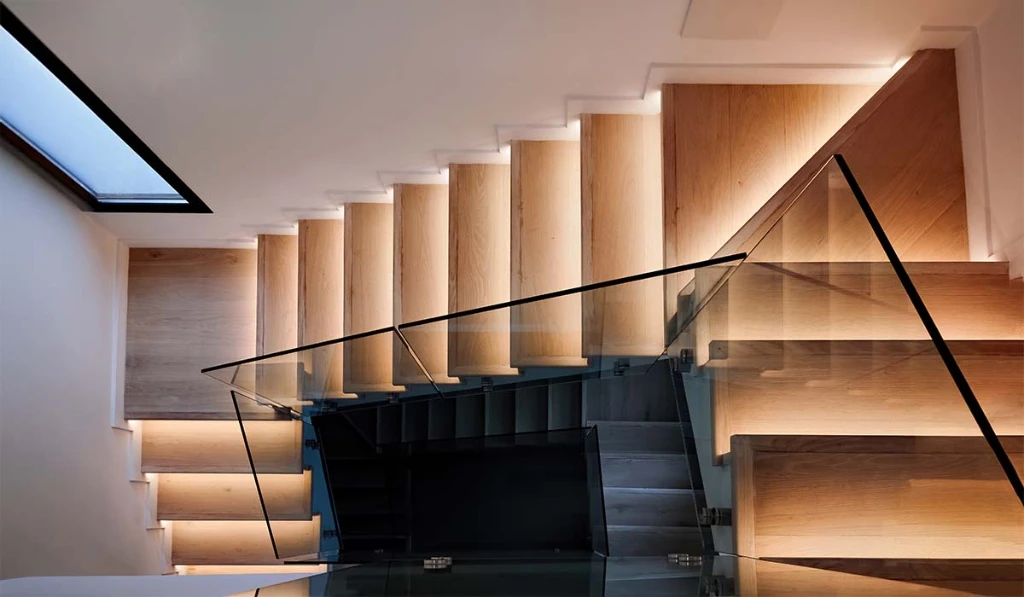
Incorporating windows in a staircase is both a modern design and a Vastu practice. To this a properly planned staircase window design enhances natural lighting and improves airflow, helping circulate fresh energy throughout the home. One of the best parts is that a well-ventilated staircase avoids stagnation and helps distribute natural energy across. On the other hand a dark and poorly lit staircase. It is symbolic of blocked progress and can lead to a flow of negative consequences, such as illness and misunderstanding. Listed below are some of the ideal styles of staircase:
- Clerestory windows: Positioned high on the wall, they permit ample light without compromising privacy.
- Vertical slit windows: These offer ventilation and light without letting in excessive heat or visibility.
- Frosted or louvered glass windows: Such designs diffuse sunlight and keep interiors cool while supporting Vastu principles.
Suitable Colours and Materials for Staircases
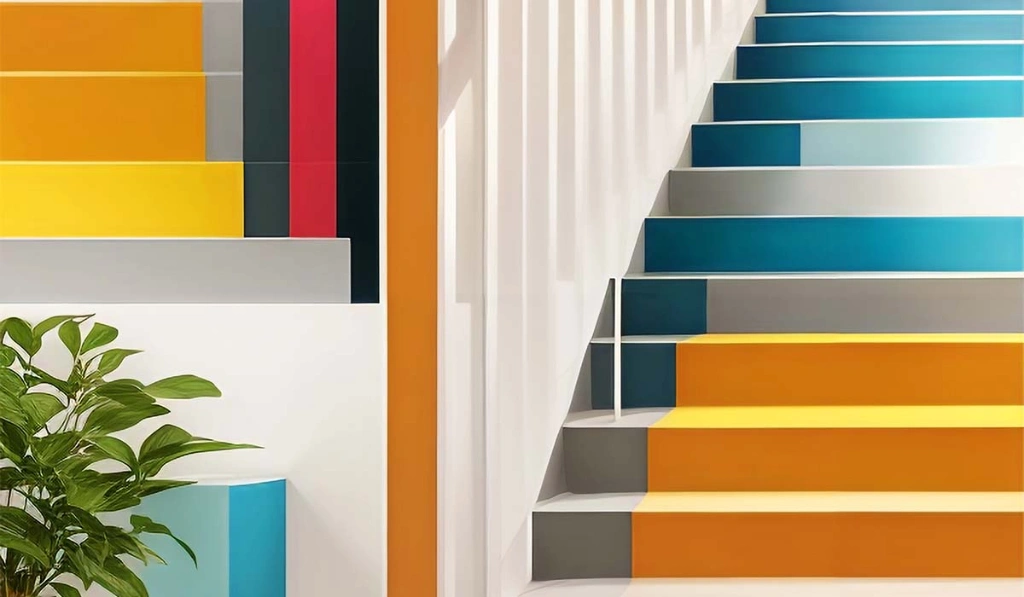
Finding suitable colors and materials that also align with your Vastu encourages the use of light, natural, and earthy colors, especially for the staircase as per Vastu. One can prefer or look for shades such as beige, cream, off-white, light grey, or pale wood. These help in maintaining a calm and balanced environment. Vibrant dark colors, particularly red and black, should be avoided unless advised otherwise by a Vastu consultant. Here are some of the materials that one can look forward to, which will reflect durability, safety, and harmony.
- Wood is recommended for west or southwest-facing staircases.
- Stone and concrete are appropriate for most orientations, especially south and west.
- Marble or granite may be used for staircases in the north or east wings, provided the orientation is correct.
Staircase Design for Homes with 2% Density Allocation
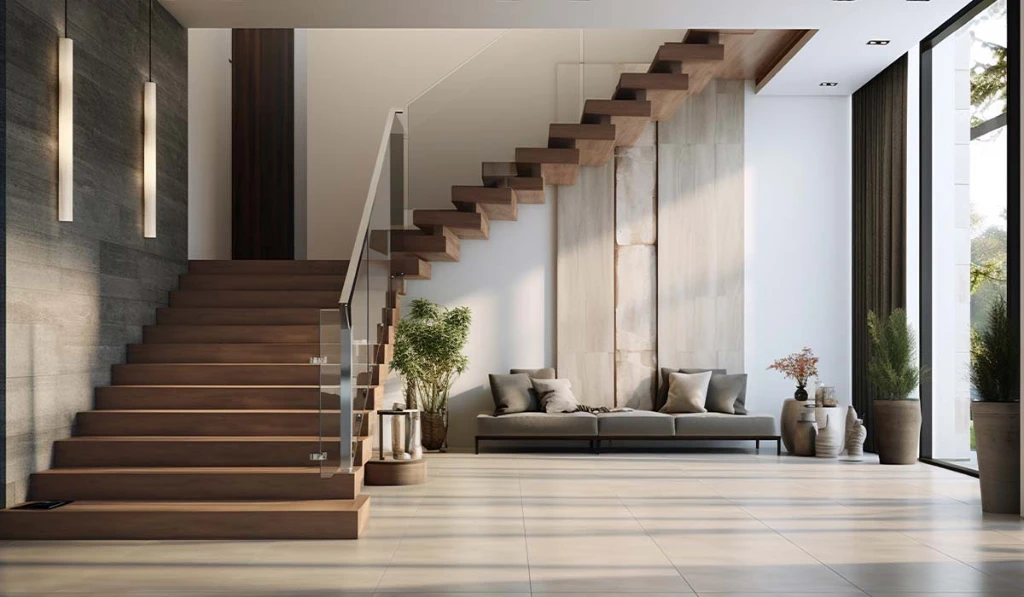
With the rising chaos and population in Indian homes, especially duplexes or any multi-floor apartments, space has become a matter of premium. Therefore, Vastu principles can still be applied effectively even when the staircase occupies just 2% of the total built-up area. Because even with the limited area, the key is to maintain an open surrounding with proper light and avoid placing objects underneath or above staircases.
| Element | Recommendation |
| Area Coverage | Limit to 2% of the built-up area |
| Shape | Prefer straight or L-shaped forms |
| Orientation | Ascend from north/east to south/west |
| Materials | Use concrete, light wood, or composite stone |
| Lighting | Add recessed lighting or narrow vertical windows |
| Avoid Under-Stair Use | Refrain from storage or toilet placement |
Common Vastu Flaws and Remedies
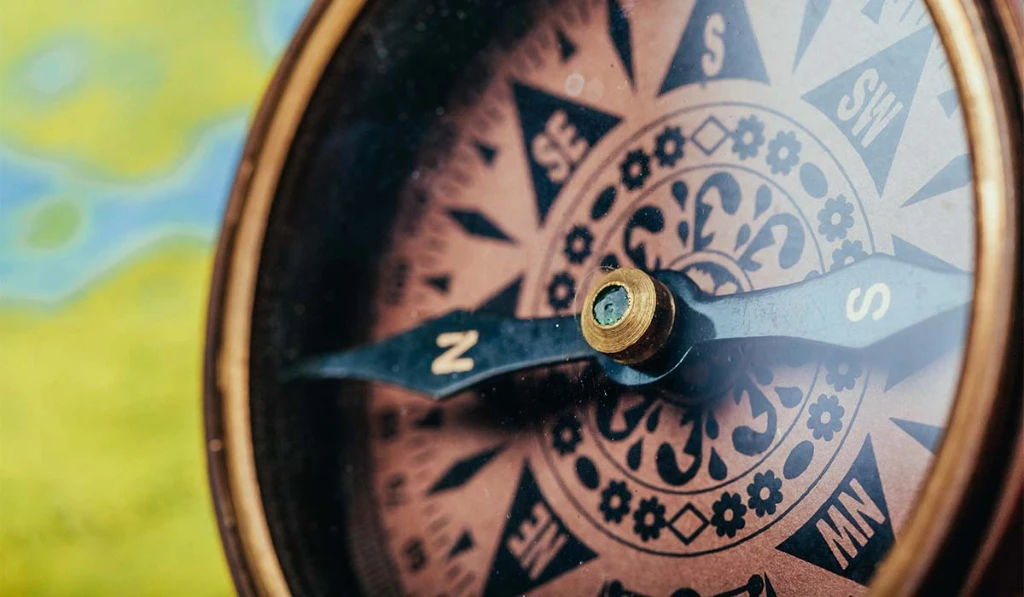
For the scenarios where a staircase already exists, following up with Vastu principles does not seem accessible. Therefore, for such situations, a structural adjustment and following some tips becomes much easier. So, here we explore some symbolic corrections and energy-balancing tools that can simply serve as effective alternatives in such situations.
For example, a staircase in the northeast direction can be corrected using an energy balancing pyramid or copper strips embedded at the base. Additionally, in cases where a staircase needs additional steps, a small platform or riser can be added to achieve an odd total. For staircases that create energy pressure near the bedroom or entrances, placing mirrors, crystals, or indoor plants nearby can definitely help remove the harsh energy.
Brightening a dark staircase and giving it a fresh coat of light breezy shades can have a big impact on the energy of the space. But these fixes work best when a skilled Vastu professional suggests them for complicated or multi-level buildings.
Conclusion
A staircase as per Vastu does more than just connect floors; it acts as a conduit for energy that affects the lives, moods, and outcomes of the people in the house. When homeowners follow Vastu Shastra guidelines for the staircase's direction, size, style, and illumination, they can bring balance, achievement, and good vibes into their home.
To create a Vastu-friendly structure, you need to pay attention to many details. These include placing the stairs in the south or west, using natural materials, having an odd number of steps, and designing windows. Even in tight spaces where the stairs take up 2% of the floor area, you can still apply Vastu principles through clever planning and design choices.
By blending practical needs with spiritual beliefs, homeowners can build homes that are not only beautiful but also full of positive energy. In these houses, each step you take leads you closer to overall wellness.